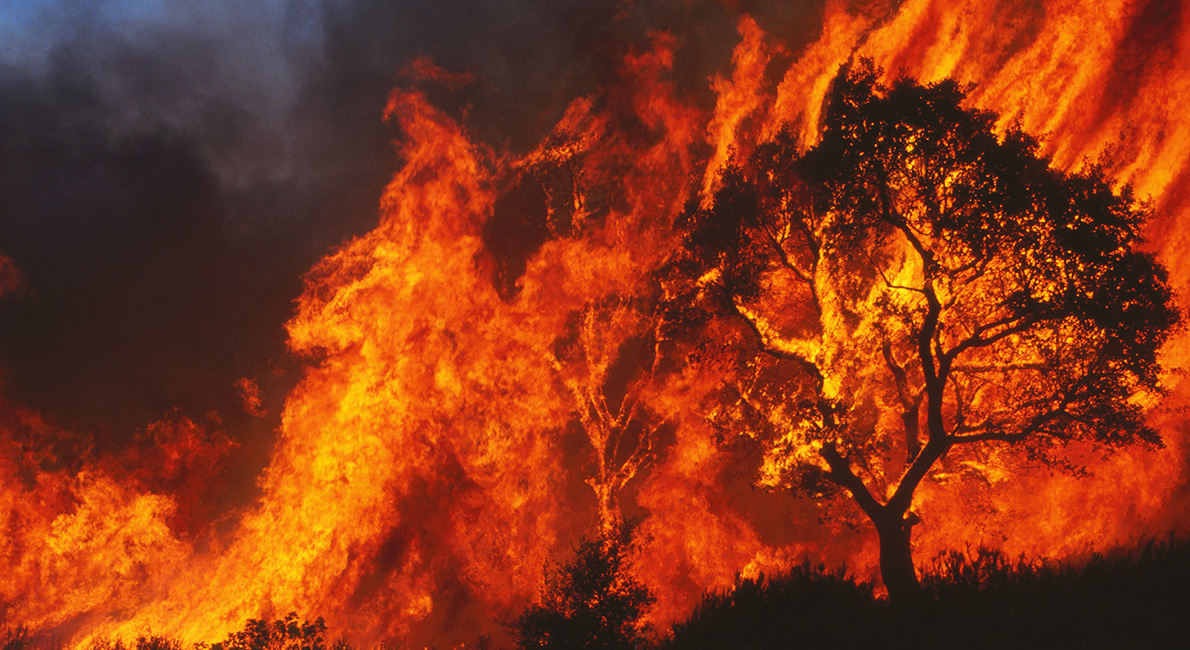


The South Korea wildfires have been sweeping through the country since last Friday, resulting in at least 28 fatalities, numerous injuries, and the destruction of approximately 48,000 hectares (118,000 acres) of forest, according to local news agency Yonhap.
The blazes, fuelled by strong winds, spread from central Uiseong County to coastal regions, posing significant challenges for firefighters. However, improved visibility and cooler temperatures following overnight rainfall on Thursday have provided more favourable conditions for containment efforts.
However, the threat of the South Korea wildfires is still active. Al Jazeera’s Jack Barton, reporting from Uiseong, said, “It’s too early to call it a turning point, but of the 11 big fires that were raging, five have been completely contained overnight.
“And while some are still burning intensely, we are seeing good results in places like Uiseong. Fires are down to 5 percent of what they were,” he said.
According to the government’s disaster response agency, about 38,000 residents have had to flee affected areas.
“We plan to mobilise all available resources to extinguish the main flames by the end of the day,” said Lim Sang-seop, chief of the Korea Forest Service told Yonhap.
South Korea is facing an unprecedented wildfire crisis, described by Acting President Han Duck-soo as “rewriting the record books for the worst wildfires in our nation’s history.”
The fires, which began in Sancheong County last Friday, have spread rapidly due to strong, dry winds, affecting multiple regions, including Gyeongbuk, Uiseong, Andong, Cheongsong, Yeongyang, and Sancheong. Among the devastation, a 1,300-year-old temple in Uiseong City was gutted, though many cultural relics were safely relocated before the flames reached the site.
In response to the escalating emergency, the national fire agency raised the crisis to its highest fire response level on Tuesday. Thousands of firefighters and approximately 5,000 military personnel have been deployed to combat the flames, with aerial support from helicopters, including those from the US military stationed in Korea.
Tragically, on Wednesday, a firefighting helicopter crashed in the mountains of Uiseong, resulting in the death of the pilot. Authorities are currently investigating the cause of the crash.
Wildfires are relatively rare in South Korea, yet this disaster has already become the deadliest in the country’s history. To date, around 17,000 hectares (42,000 acres) of forest have been destroyed, making this the third-largest wildfire in terms of area burned.
Authorities continue to battle the flames and assess the full extent of the damage as the crisis unfolds.
Share